Fast Answers Don't Mean Students Understand
A lively quiz and a high score can hide what students still cannot explain. Here is what to look at after the timer stops.
Shiksha4 min read

Meera is a composite teacher used to illustrate a common classroom situation. Her class and its results are illustrative, not findings from a study.
The quiz went really well. Meera had written ten questions about why things float. Each question gave students thirty seconds to answer. Her class loved it. They shouted, laughed, and watched the leaderboard move.
The class scored 78%. Meera closed her laptop feeling that the topic had landed. Two weeks later, a test asked students to explain in their own words why ice floats on water. Many struggled.
What the timer measures
Meera had not necessarily made a mistake. The quiz did what a timed, multiple-choice quiz can do: it captured selected answers under time pressure. That result is useful, but it cannot by itself show how students reasoned or whether they can explain the idea later.
A quick answer might come from fluent recall. It might also come from recognising a familiar option or making a guess. A slower answer might involve careful reasoning. Speed alone does not tell those paths apart.
Time pressure can matter. In Beilock and Carr's study of pressure and mathematics performance, performance under pressure varied with the demands placed on working memory. That finding does not mean every classroom timer is harmful; it is a reason to avoid treating speed as a pure measure of understanding.
Two students, one question
Imagine two students answering the ice question. One chooses the correct option after four seconds because it looks familiar. Another takes twenty seconds, thinks through density, and chooses the same option. The quiz records two correct answers. It does not reveal which explanation either student could give.

If the activity awards more points for speed, the first student may rank higher. That ranking is accurate for the game's rules. It is not an explanation of either student's thinking.
Who gets left out of the result
A short countdown can make it harder to see the thinking of students who need more time to read, translate, check, or explain an answer. It can also change how a student who feels anxious approaches the question. These are possibilities to watch for in a particular class, not a diagnosis of individual learners.
The practical question is whether every student had a real chance to respond. If the same few students dominate the leaderboard while others stop attempting questions, the teacher is receiving less evidence from the room.
Why the average is not enough
A 78% class score compresses many different answer patterns into one number. It might reflect broad understanding with a few gaps. It might hide one misconception shared by many students. The next lesson depends on which pattern is true.
Instead of starting with the average, inspect the distribution for each question. Which wrong option attracted the most students? Does that option point to a specific idea worth discussing? An answer distribution is a starting point for a conversation, not proof of what every student believed.
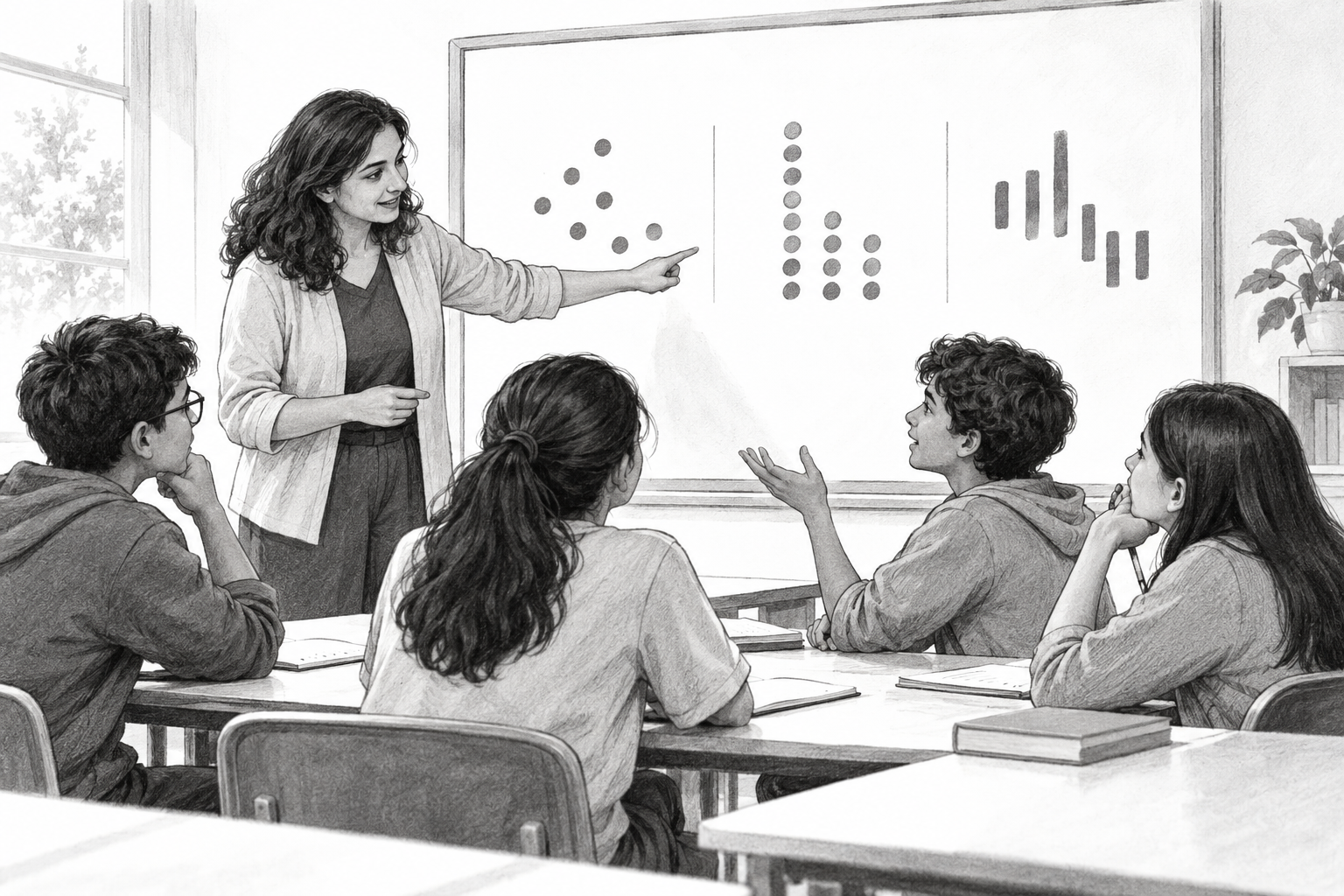
That is the value of a formative check: it helps the teacher decide what to revisit. Shiksha's live classroom quiz shows whole-class response distributions, so a teacher can spot a common distractor and ask students to explain it.
Three things to check instead of the score
1. The most popular wrong answer. Ask why someone might reasonably have chosen it. The explanation may uncover the exact misconception the class needs to work through.
2. The pattern across questions. If several questions rely on the same underlying idea, compare their responses. A repeated difficulty may point to an earlier step that needs reteaching.
3. Confidence, asked separately. Invite students to say how sure they feel, with a quick show of hands or a separate confidence check. Treat confidence as another clue, not a verdict: a correct answer can be uncertain, and a confident answer can still be wrong.
When a timer helps
Speed can be a valid goal when students are practising something they need to recall fluently, such as times tables or a well-rehearsed fact. In that activity, a timer gives information about fluency. When the goal is reasoning, give students enough time to show their reasoning.
This is one reason a teacher-paced alternative to Kahoot can be useful: the teacher controls when to move on, rather than letting a countdown make that decision for the class.
Try this in your next lesson
Run the quiz you already planned. For one concept question, remove the speed pressure. After everyone answers, find the wrong option chosen most often. Ask: Why might someone choose this? Then invite students to explain and reconsider their answers.
The conversation may tell you more about what to teach next than the leaderboard does. The aim is to see what students are thinking, while there is still time to respond.
Share this article